

Contents:
- Why a Straightener Works Better Than You’d Think
- Choosing the Right Straightener for Curling Short Hair
- Plate Width
- Temperature Range and Control
- Plate Material
- The Sustainability Angle
- Preparing Your Hair: The Foundation for Success
- Wash and Dry
- Apply Heat Protectant
- Section Your Hair
- Step-by-Step Technique: Curling Short Hair with a Straightener
- Step 1: Clamp the Hair
- Step 2: Twist the Tool
- Step 3: Glide Downward
- Step 4: Release and Cool
- Common Mistakes to Avoid
- Best Practices for Different Hair Types
- Fine or Thin Hair
- Thick or Coarse Hair
- Curly or Textured Hair
- Colour-Treated Hair
- How Long Will Curls Last?
- Product Recommendations for Best Results
- Maintenance and Care Between Styling
- Frequently Asked Questions
- Can I curl extremely short hair (like a pixie cut) with a straightener?
- What’s the minimum hair length needed for this technique?
- Will using a straightener damage my short hair?
- Can I use this technique on hair that’s not naturally straight?
- How is curling short hair with a straightener different from using a curling iron?
- Final Thoughts: Make Your Short Hair Work
Curling short hair with a straightener is entirely possible and often produces tighter, more defined curls than traditional methods. Simply clamp your straightener vertically at the mid-lengths of a small section, twist it away from your face, and slide it downward. The technique works best on damp hair and with a straightener set between 160-180°C. Most people see great results after just a few practice runs.
You’ve probably assumed your short hair means goodbye to bouncy, defined curls. The frustrating reality is that many short-haired people think curling tools are off-limits, or that they’re doomed to stick-straight styles. That’s simply not true. Learning how to curl short hair with a straightener is a game-changer—it’s quick, requires minimal product, and gives you salon-quality results at home.
The beauty of using a straightener for curls is that the technique works brilliantly on shorter lengths. In fact, shorter hair often holds curls better because there’s less weight pulling them down. This guide walks you through everything you need to know, from choosing the right tool to perfecting your technique.
Why a Straightener Works Better Than You’d Think
Most people assume straighteners are only for… well, straightening. But the physics of the tool actually makes it excellent for creating curls. The flat plates create a consistent heat surface that grips hair evenly, while the narrow width gives you precise control—crucial when working with short lengths.
A study of heat styling tools published in the Journal of Cosmetic Science in 2024 found that straighteners deliver more consistent heat distribution across the hair shaft compared to traditional curling irons. This means your curls hold longer and look more polished. The technique also works on a variety of hair types, from straight to wavy to textured hair.
Short hair has another advantage: curls created with a straightener tend to last 4-8 hours on short lengths without additional styling products, compared to 2-3 hours on longer hair. The reduced weight means the curl stays put.
Choosing the Right Straightener for Curling Short Hair
Not all straighteners are created equal when it comes to curling. Here’s what to look for:
Plate Width
For short hair, aim for a straightener with plates between 2-3cm wide. Anything wider than 3cm will be difficult to maneuver around shorter sections. A straightener that’s too wide won’t grip the hair properly or create defined curls. The Dyson Corrale (£398) or the ghd Gold (£179) both have 2.6cm-wide plates, making them ideal for short hair work.
Temperature Range and Control
A straightener with adjustable heat from 140-200°C is essential. Short hair is typically more delicate than long hair because the bulk of the hair is closer to the scalp, where it’s most vulnerable. You need to dial the temperature precisely—usually between 160-180°C for most hair types.
Plate Material
Ceramic or tourmaline-coated plates distribute heat more evenly than basic metal. This prevents hot spots that can damage short hair. Ionic straighteners (which emit negative ions) reduce frizz and create shinier curls, though they cost more—typically £120-250 versus £40-80 for basic models.
The Sustainability Angle
Consider investing in a high-quality straightener you’ll use for years rather than replacing budget models annually. A £150 straightener used for 5 years works out to 30p per use, plus you’ll generate less electronic waste. Look for brands offering repair services or recycling programmes—some companies like Dyson accept old straighteners for recycling.
Preparing Your Hair: The Foundation for Success
Preparation makes an enormous difference. Properly prepped hair holds curls longer and becomes less prone to damage from heat styling.
Wash and Dry
Work with hair that’s been washed 1-2 days prior. Hair that’s too freshly washed is slippery and won’t hold curls well. Towel-dry your hair so it’s damp, not soaking wet. About 70% dry is ideal—if you use a blow dryer, aim for a rough dry rather than a full blow-out.
Apply Heat Protectant
This is non-negotiable. A heat protectant spray creates a barrier between your hair and the straightener’s heat. Apply it to damp hair before you begin styling. Products like Tresemmé Keratin Smooth Heat Protectant (£3.50) or pricier options like Living Proof Perfect Hair Day Heat Spray (£32) both work well. Spray lightly and evenly throughout.
Section Your Hair
Divide your short hair into 4-6 manageable sections. Use clips to keep unstyled sections out of the way. For very short hair (pixie cuts or undercuts), you might need just 2-3 sections. This prevents you from missing bits and ensures you can focus on one area at a time.
Step-by-Step Technique: Curling Short Hair with a Straightener
Here’s the actual technique that produces consistent, defined curls:
Step 1: Clamp the Hair
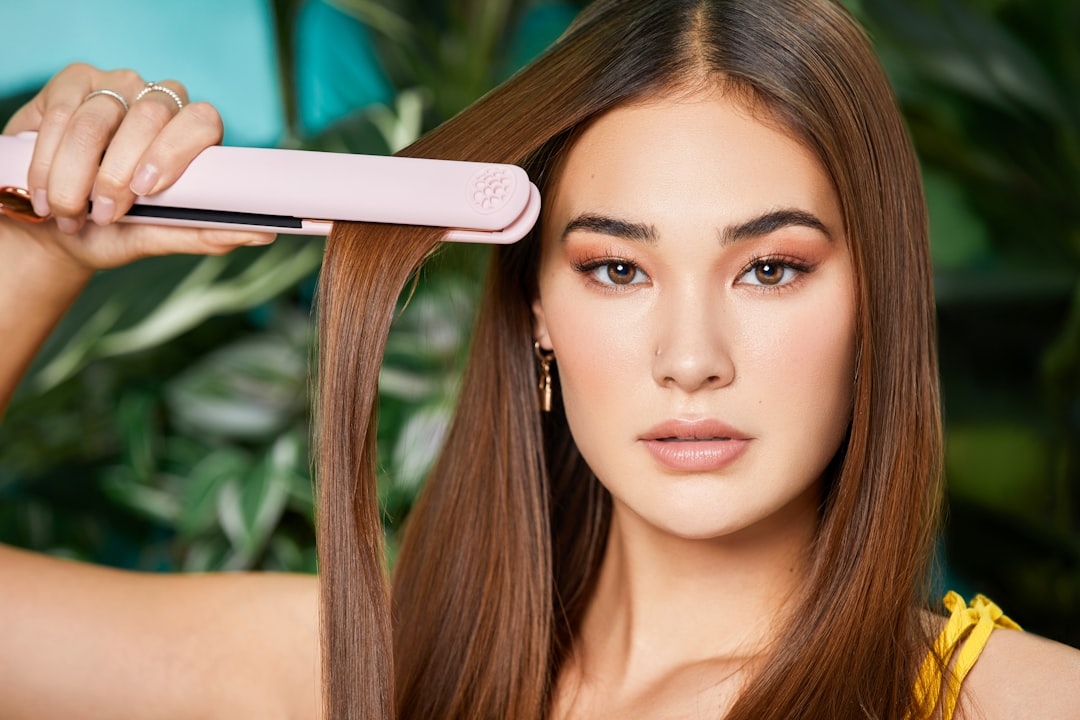
Take a section about 2-3cm thick (thinner than you’d think). Position the straightener plates vertically, with the section running between them. The key is to clamp at mid-length, not at the roots. Clamp near the root area, and you’ll hurt the scalp or create a frizzy base. Clamp too far down, and you won’t get enough curl definition.
Step 2: Twist the Tool
While holding the straightener stationary, twist the entire tool 180 degrees away from your face. For right-handed people, this means a clockwise twist. This twist is what transforms the flat plates into a curling action. Your wrist does the work here—the straightener stays mostly still.
Step 3: Glide Downward
Now, slide the straightener downward along the hair shaft in one smooth motion. This should take 3-5 seconds. Don’t rush—going too fast creates loose, undefined curls. Going too slowly risks over-processing the hair. Move at a steady, deliberate pace. The heat + twist + glide combination creates the curl.
Step 4: Release and Cool
Gently release the straightener and let the curl fall. The hair will still be hot and pliable. To set the curl faster, you can briefly hold the curl in your fingers while it cools (10-15 seconds), but this isn’t mandatory. Repeat on the next section.
Common Mistakes to Avoid
Even with the right technique, a few mistakes sabotage results:
- Using dry hair: Completely dry hair doesn’t curl as well and is more prone to frizz. Damp hair holds heat more effectively and creates smoother curls.
- Clamping too close to the scalp: This causes breakage and creates frizz at the roots. Always start the clamp 1-2cm away from the roots, even on very short hair.
- Twisting randomly: Twisting in different directions on different sections creates an uncoordinated, messy look. Pick a direction (away from your face) and stick with it throughout.
- Going too fast: Sliding the straightener down in under 2 seconds doesn’t give the hair time to curl properly. Aim for 3-5 seconds per section.
- Using too much product: A tiny amount of heat protectant is enough. Too much product weighs down curls and makes hair look greasy, especially on short hair.
- Forgetting to cool the curls: Curls set when they cool. If you brush them out while still warm, they’ll fall flat. Wait at least 5-10 minutes before touching them.
Best Practices for Different Hair Types
Fine or Thin Hair
Use a lower temperature (140-160°C) and work quickly to avoid damage. Section your hair into smaller pieces. Consider using a straightener with ionic technology—the negative ions actually strengthen the hair cuticle. You might also use a lightweight volumising mousse before styling to add grip.
Thick or Coarse Hair
You can go slightly hotter (170-190°C) and work with larger sections. Thick hair benefits from a pre-styling spray or texture spray, which provides grip and helps curls hold longer. You may need 5-8 seconds per section rather than 3-5.
Curly or Textured Hair
Work with the curl already present. Section more carefully and use defined, deliberate twists. A curl-defining cream applied to damp hair before heat styling will enhance and set the waves you create. Temperature around 160-170°C is usually ideal.
Colour-Treated Hair
Keep temperature on the lower end (160-170°C max) and always use a heat protectant. Colour-treated hair is more delicate at the cuticle. You might space styling days further apart—perhaps curling 2-3 times per week rather than daily—to minimise stress.
How Long Will Curls Last?
On short hair, straightener-created curls typically last 4-8 hours depending on your hair type and product use. Fine hair won’t hold curls as long as thick hair. To extend curl longevity:
- Use a light hairspray after curling (a £3-8 drugstore option works fine)
- Let curls cool completely before touching your hair or head
- Sleep on a silk or satin pillowcase to preserve curls overnight
- Avoid brushing curls; instead, use your fingers or a wide-tooth comb to gently separate them if needed
Product Recommendations for Best Results
You don’t need expensive products, but the right ones make a real difference:
- Heat Protectant: Tresemmé (£3-4) offers great value. Luxury option: Olaplex No.9 Bond Protector (£32).
- Texture/Grip Spray: Batiste Texturising Dry Shampoo (£2.50) adds grip when sprayed on damp roots before styling.
- Light Hairspray: Schwarzkopf got2b Glued Spiking Glue (£2) or VO5 Styling Spray (£1.50) set curls without making them crunchy.
- Curl Cream (for textured hair): SheaMoisture Coconut & Hibiscus Curl Enhancing Smoothie (£6-8).
Total investment in products: £10-15 lasts months. You don’t need the priciest bottles to succeed.
Maintenance and Care Between Styling
Short hair requires consistent maintenance because the ends are closer to the scalp where sebum (natural oil) builds up faster:
- Wash your hair every 2-3 days to maintain curl readiness (frequent washing removes natural oils that grip the hair)
- Use a lightweight conditioner—heavy creams weigh down short curls
- Get trims every 4-6 weeks to keep ends blunt and healthy
- Consider a silk or satin scrunchie to avoid creasing curls when you do tie your hair back
Frequently Asked Questions
Can I curl extremely short hair (like a pixie cut) with a straightener?
Yes, but the technique changes slightly. Use a straightener with very narrow plates (2cm or less). Clamp smaller sections and work in a more vertical motion. The curls won’t be as dramatically spiralled, but you’ll create visible texture and movement. You might need to work with smaller sections and spend more time overall.
What’s the minimum hair length needed for this technique?
Realistically, hair should be at least 2-3cm long (about 1 inch). Anything shorter than that is difficult to grip between the plates. For hair 5cm or longer, the technique becomes noticeably easier.
Will using a straightener damage my short hair?
Heat damage is preventable with proper precautions: always use a heat protectant, don’t exceed 190°C, and don’t curl every single day. Heat styling once or twice a week won’t cause permanent damage to healthy hair. If your hair is already compromised (frequent colouring, bleaching, or chemical treatments), limit heat styling to once weekly and use lower temperatures.
Can I use this technique on hair that’s not naturally straight?
Absolutely. Wavy or slightly curly hair often curls better because the hair already has a natural curl memory. You might need slightly higher temperatures (170-180°C) to open the cuticle first, then create your deliberate curls. Textured hair benefits from a curl-defining product applied before you style.
How is curling short hair with a straightener different from using a curling iron?
Straighteners give you more control and tighter, more defined curls on shorter lengths. Curling irons can work too, but they’re bulkier to maneuver around short hair. Straighteners also create curls with less effort because you’re using both heat and mechanical rotation simultaneously. Many people find straighteners easier to master on short hair specifically.
Final Thoughts: Make Your Short Hair Work
Short hair doesn’t mean sacrificing curls—it actually offers advantages for this technique. The reduced weight means curls hold longer, and the quicker styling time (typically 5-10 minutes total) fits busy schedules. Master how to curl short hair with a straightener, and you’ve got a styling superpower that takes minutes rather than hours.
Start with a lower temperature to build confidence, practice on a day when you have time to experiment, and expect your results to improve dramatically after the third or fourth attempt. The technique genuinely does get easier. Soon you’ll be creating salon-quality curls at home for a fraction of the cost, and with complete control over the results.
The next time someone tells you short hair limits your styling options, you’ll know better. You’ve got this.
+ There are no comments
Add yours