



Contents:
- Understanding Your Starting Point: Straight Hair and Curl Potential
- Temporary Curls: Methods That Last Hours to Days
- Heat Styling with Curling Irons and Wands
- Heatless Curls: Overnight Methods
- Semi-Permanent Curls: Perms and Chemical Methods
- Traditional Alkaline Perms
- Digital Perms (Wavy Perms)
- Semi-Permanent to Temporary: Curl-Enhancing Products and Routines
- The Curly Girl Method (CGM)
- Flaxseed Gel Method
- A Reader’s Journey: From Straight to Curly
- Heat Damage Prevention and Sustainability
- Expert Perspective: What Stylists Know
- Choosing Your Method: A Decision Matrix
- FAQ Section
- Can straight hair be made permanently curly without a perm?
- How long does it take to get curls?
- Will a perm work on my straight hair?
- What’s the cheapest way to get curly hair?
- Can I get curls if I have very short hair?
You’ve scrolled through endless Instagram posts of bouncy curls and think: “How do I get my hair curly?” It’s a question that assumes your straight hair is just waiting to curl, if only you knew the right product or technique. The reality is more complicated—and more hopeful. Getting curly hair depends entirely on what you actually want: temporary curls for an evening, waves that last a few days, or semi-permanent curls that require commitment.
Understanding Your Starting Point: Straight Hair and Curl Potential
Before pursuing curls, understand that your hair’s natural texture is determined by genetics. Your hair follicles have a shape that dictates curl formation. Straight hair has round follicles; curly hair has flattened or spiral-shaped follicles. You cannot permanently change your hair’s fundamental structure without chemical intervention or permanent styling methods.
However, you absolutely can create curls temporarily or semi-permanently through heat styling, chemical treatments, or specific product routines. The method you choose depends on how long you want curls to last and how much damage you’re willing to risk.
Temporary Curls: Methods That Last Hours to Days
Heat Styling with Curling Irons and Wands
The fastest way to get my hair curly is heat styling. A curling iron or wand creates curls that last 4-24 hours depending on hair length, thickness, and humidity. Technique matters enormously.
Curling iron method (barrel curls): Heat your curling iron to 350-400°F (175-200°C). Section hair into 2-inch (5cm) sections. Wrap each section around the heated barrel away from your face, hold for 15-30 seconds, release. Repeat across your entire head. Curls will be tightest immediately after heat; they’ll relax slightly over 1-2 hours. To extend hold, spray finished curls with medium-hold hairspray (cost: £4-£10 per bottle).
Curling wand method (spiral curls): A wand (tapering barrel, no clamp) wraps hair around the barrel. Wands create spiralcurls that appear more natural. Hold each section for 20-30 seconds. Wand results last 6-16 hours and look less polished than iron curls, appearing more textured.
Equipment costs: A quality curling iron (GHD, Dyson, or Babyliss) costs £40-£150. Budget options (Tesco, Sainsbury’s) cost £15-£25 and work adequately for beginners. Wands cost £30-£120. These tools last 3-7 years, amortising to roughly £0.20-£0.50 per use.
Heatless Curls: Overnight Methods
If you want to avoid heat, several overnight methods create curls by morning. All work by setting damp hair in a curl shape, allowing it to dry into that form.
Braiding method: Braid damp hair (wet or shower-damp works best) before bed. Braid tightly or loosely depending on how defined you want curls. Sleep on it. Unbraid in the morning to reveal waves or loose curls. Results last 12-36 hours depending on hair texture. This is free and damage-free, but curls are often uneven and can look messy.
Roller method: Wrap damp hair around fabric or foam rollers (large rollers for loose waves; small rollers for tight curls). Secure with clips. Sleep on it. Unroll in the morning. Results last 24-48 hours. Rollers cost £5-£12 per set and last indefinitely. This method is uncomfortable for sleep and requires rollers to dry fully before unrolling (ideally 8+ hours).
Plopping with a t-shirt: Wrap damp hair in a cotton t-shirt, creating a “plumed” shape. Leave for 30 minutes to several hours. Remove and either air-dry or use a diffuser attachment on your blow dryer. This creates natural-looking texture and waves. Results last 12-24 hours.
Setting spray importance: For any heatless method, apply a setting spray before curling (cost: £5-£10 per bottle). This locks curl shape and extends hold by 50%.
Semi-Permanent Curls: Perms and Chemical Methods
Traditional Alkaline Perms
A perm uses chemicals to permanently alter your hair’s structure, creating curls that grow out over 3-6 months. This is the traditional method—the same technique used since the 1980s.
How it works: Hair is wrapped around rollers. A perm solution (typically ammonium thioglycollate) chemically breaks down disulphide bonds in the hair cortex, allowing the hair to reform into a curved shape around the roller. A neutraliser then re-establishes the bonds in the new shape. The curl is permanent; it grows out as new, uncurled hair emerges from your scalp.
Results: Results are immediately visible and last until hair grows out (3-6 months for noticeable fade, 12-18 months until completely grown out). The curl tightness depends on roller size: small rollers create tight curls; large rollers create loose waves. You can choose your desired curl type during the consultation.
Damage and care: Perms are chemically intense. They damage hair, particularly if hair is already damaged from colouring, heat styling, or previous perms. Post-perm, your hair requires intense moisture. Weekly deep conditioning (£8-£20 per treatment), hydrating shampoos and conditioners (£5-£12 each), and minimal heat styling are essential. Ignoring post-perm care results in breakage and frizz within weeks.
Cost and availability: In the UK, a perm costs £60-£200 depending on hair length and salon prestige. London salons and high-end salons cost £120-£200. Regional salons cost £60-£100. The procedure takes 2-4 hours. Most people require a trim (additional £20-£60) after the perm to remove damaged ends.
Maintenance: After your perm, style with curl-enhancing products (curl creams, gels, or mousse: £8-£18 each). Diffuse-dry with a blow dryer for defined curls, or air-dry for softer waves. Sleeping in a pineapple (ponytail on top of head) or bonnet preserves curls and reduces friction-induced frizz.
Digital Perms (Wavy Perms)
A newer alternative, digital (or ceramic) perms use heat during the perm process, supposedly creating smoother, less frizzy curls than traditional alkaline perms. The chemical process is the same; heat is applied while perming chemicals work.
Results: Curls are looser and more natural-looking than traditional perms. They’re ideal if you want waves rather than ringlets. Results last 3-6 months like traditional perms.
Cost: £80-£250, typically higher than alkaline perms because the process requires specialised equipment. Availability is limited; only salons specifically offering digital perms have the equipment.
Damage: Still chemical-intensive. Hair requires the same intensive post-perm care as traditional perms. The added heat component may increase damage risk slightly, though manufacturers claim reduced damage compared to alkaline perms.
Semi-Permanent to Temporary: Curl-Enhancing Products and Routines
If you want to get my hair curly without chemical commitment, product routines and styling techniques can create the appearance of natural curls. This approach requires consistency but offers flexibility.
The Curly Girl Method (CGM)
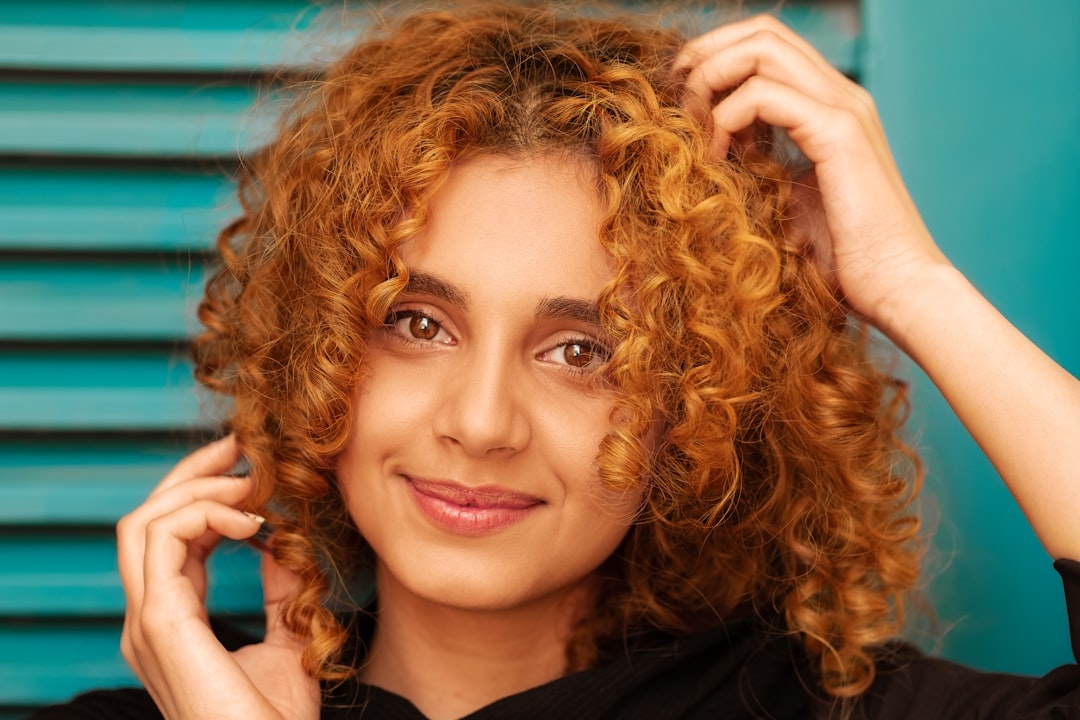
The Curly Girl Method is a no-poo, low-manipulation routine designed for wavy and curly hair. It works on some straight hair types, though results are modest.
Core principles:
- Stop using sulfate shampoos (they strip hair’s natural oils)
- Condition wash instead of shampooing (use only conditioner to cleanse)
- Use leave-in conditioner and curl creams/gels
- Diffuse-dry or air-dry; never rough-dry
- Avoid touching hair while it dries (prevents frizz)
- Sleep in a pineapple or bonnet to preserve curls
Results on straight hair: If your hair has any natural wave, CGM can enhance it dramatically. Straight hair typically shows minimal results, though the routine improves texture and shine. The “transition phase” (first 3-6 weeks) often looks worse as product builds up; pushing through reveals whether your hair will respond.
Product costs: A basic CGM routine costs £30-£60 monthly: sulfate-free conditioner (£6-£12), leave-in conditioner (£8-£15), curl cream or gel (£8-£18), and optional mousse (£8-£12). Budget-friendly options exist (Tesco, Superdrug own-brands: £4-£8 each), though premium products (DevaCurl, Kinky-Curly: £12-£20) are popular.
Flaxseed Gel Method
An older, more sustainable approach: create gel from flaxseeds at home. Boil one cup of flaxseeds in water for 8-10 minutes, strain, and the remaining liquid is a natural gel. It costs pence to make and provides hold similar to commercial gels.
Application: While hair is soaking wet, apply flaxseed gel throughout. Scrunch hair to encourage curl formation. Diffuse-dry or air-dry. Results are soft, natural-looking curls lasting 12-24 hours. The method is eco-friendly (zero packaging, biodegradable) and extremely cheap (roughly £0.20 per application).
Drawback: Homemade gel has shorter shelf-life (3-5 days refrigerated) and can feel stiff or flaky if over-applied. Commercial gels are more convenient, though less sustainable.
A Reader’s Journey: From Straight to Curly
Emma, a 28-year-old from Bristol, had straight hair her entire life. After years of wishing for curls, she tried CGM in early 2026. She purchased a leave-in conditioner (£9), curl cream (£14), and gel (£10)—total investment: £33. During her first week, her hair looked undefined and product-heavy. By week three, subtle waves appeared. By week six, visible waves were consistent; after a blow dryer with diffuser attachment, she had definable curls.
Emma’s results were modest—2A-2B waves rather than true curls—but she was thrilled. Six months into CGM, she decided to try a perm for tighter curls. She booked a consultation, and her stylist recommended a digital perm given her hair’s history with CGM. The perm cost £160 and lasted 3 hours. Results were immediate: beautiful 3A waves throughout her head. She maintained them with diffuse-drying and CGM-style products, spending £40-£50 monthly on maintenance. Nine months after the perm, new growth forced her to reconsider: continue maintaining the perm with regular touch-ups (not possible; perms can’t be touched up, only re-done), or embrace her natural straight hair with occasional styling. She chose a hybrid: keep the remaining perm curls until they grow out, use heat styling for special occasions, and maintain CGM products daily for improved texture. Her total investment: £33 (initial CGM) + £160 (perm) + £240 (six months of products) = £433 over one year, versus the £800+ she’d spent on professional styling before discovering DIY methods.
Heat Damage Prevention and Sustainability
Whichever method you choose, heat styling damages hair. To minimise damage:
- Use heat protectant spray before curling: Costs £5-£12 per bottle, reduces heat damage by 30-50%.
- Keep curling iron temperature under 400°F (200°C): Higher temperatures damage faster. Fine or thin hair should stay under 350°F (175°C).
- Limit heat styling to 2-3 times weekly: Daily heat styling severely damages hair within weeks.
- Deep condition weekly: Costs £8-£20 per treatment; essential after any heat styling.
- Get trims every 6-8 weeks: Costs £20-£50; removes damaged ends before they split.
For sustainability, consider these approaches: heatless methods (braids, rollers, plopping) are damage-free and cost near-zero. Chemical perms are one-time investments lasting months, versus daily heat styling’s cumulative damage. CGM routines using refillable products or bulk ingredients reduce packaging waste significantly. Flaxseed gel is the most sustainable styling option: create it fresh weekly from bulk flaxseeds (approximately £2 per month).
Expert Perspective: What Stylists Know
James Crawford, a trichologist at the Institute of Trichologists in London, explains: “People ask me ‘how do I get my hair curly’ assuming there’s a magical product or technique. The truth is: your hair type, the method’s commitment level, and post-treatment care determine success. A perm creates structure; products and styling enhance it. Skip maintenance, and even a good perm looks terrible. I often recommend clients try heat styling or CGM first before committing to a perm. It’s cheaper, reversible, and shows whether they actually want daily curl maintenance.”
Choosing Your Method: A Decision Matrix
The right method depends on your priorities:
- Want curls for one evening: Heat curling iron or wand. Time: 30-45 minutes. Cost: zero (if you own tools). Duration: 6-12 hours. Damage: moderate.
- Want curls lasting 2-3 days: Overnight braids or rollers + setting spray. Time: 5 minutes prep, sleep. Cost: £5-£20 (spray). Duration: 36-72 hours. Damage: none.
- Want to try curls without commitment: CGM routine. Time: 5-10 minutes daily. Cost: £30-£60 monthly. Duration: indefinite if maintained. Damage: none (actually improves hair health).
- Want semi-permanent curls: Perm (alkaline or digital). Time: 2-4 hours. Cost: £60-£250. Duration: 3-6 months. Damage: significant.
- Want sustainable curls: Flaxseed gel + diffuse drying. Time: 10 minutes. Cost: £0.20 per application. Duration: 12-24 hours. Damage: none.
FAQ Section
Can straight hair be made permanently curly without a perm?
No. Without chemical alteration (perm), curls are temporary or semi-temporary. Styling, products, and routines can enhance natural texture, but they cannot create permanent curls on genetically straight hair. A perm is the only permanent method.
How long does it take to get curls?
Heat styling: 30-45 minutes. Heatless overnight methods: 5 minutes prep + overnight drying. CGM routine: 3-6 weeks to see noticeable results. Perm: 2-4 hours, but results are immediate. Time investment depends entirely on your chosen method.
Will a perm work on my straight hair?
Yes. Perms work on all hair types, including straight hair. However, straight hair often shows less dramatic curl formation than naturally wavy hair. Consult a stylist before booking; they can assess your hair and explain realistic expectations.
What’s the cheapest way to get curly hair?
Overnight braids or heatless methods are free beyond initial product cost. Flaxseed gel (homemade) costs pence. CGM routine costs £30-£60 monthly. A perm is a higher initial investment (£60-£250) but costs less long-term if heat styling would otherwise be daily.
Can I get curls if I have very short hair?
Heat curling and perms work on any hair length, though very short hair (under 5cm) shows less defined curls. The shorter the hair, the faster curls relax. Heatless methods work poorly on very short hair because there’s insufficient length to set curl shape overnight. Styling products and blow dryer styling are your best options for short hair.

+ There are no comments
Add yours